

Most colleges promise to prepare students for the real world. At Campus, it’s embedded in our philosophy — and recently, three of our students had the chance to prove it.
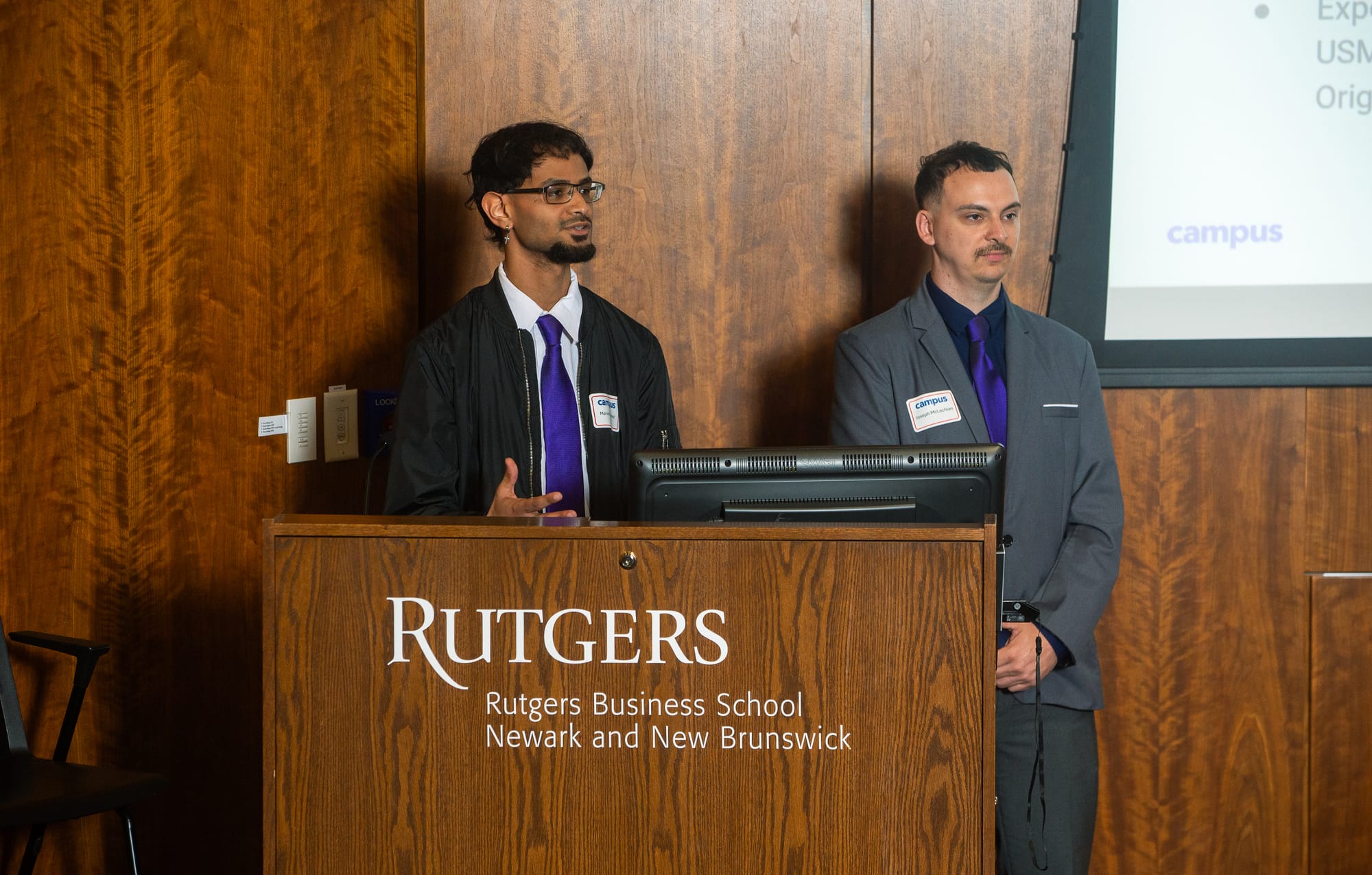
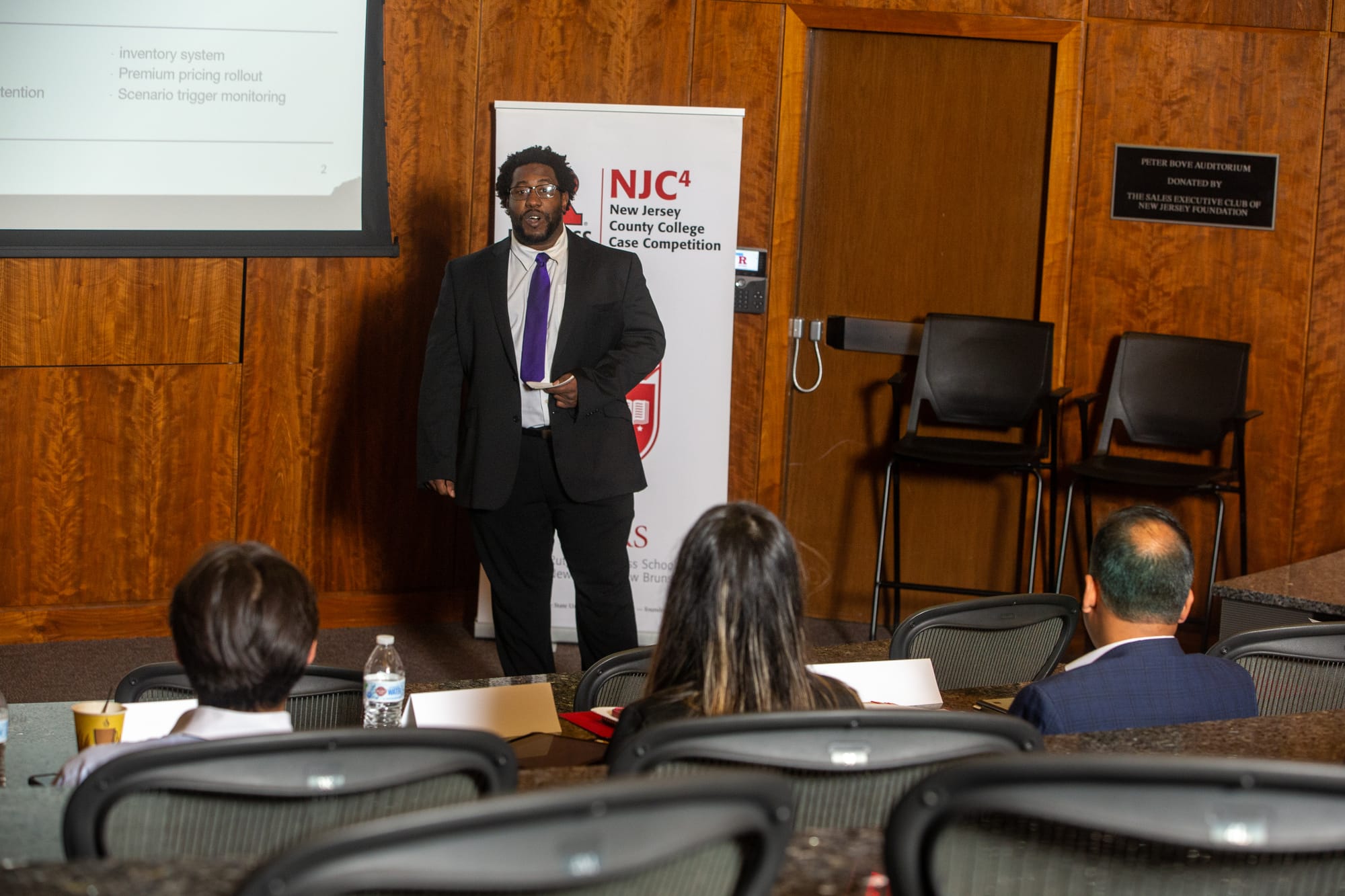
Last week, a team of three Campus students competed in the Rutgers Business School College Case Competition, going up against students from colleges and universities across New Jersey. Following weeks of preparation, our students presented their case before a panel of judges. They were tasked with solving the real world problems encountered by a real world business.
“Most case competitions are not real companies. Often, cases are retrospective, stylized, or the names are hidden. Whereas this company has a real, actual problem in real time,” explained AABA Program Director Todd Fitch, who was also the team’s coach. “So they really were acting as management consultants, which makes it especially interesting to see what the company decides to do.”
Classroom Learning in Action
What made this case competition uniquely challenging was how much it demanded of students across disciplines. To develop their recommendations, the team had to draw on marketing, operations, accounting, finance, even macroeconomics, applying concepts like the impacts of tariffs and trade barriers to a live business situation.
“Management consulting is kind of an amalgamation of various skill sets,” said Fitch. “I think a lot of the skills and knowledge they’ve learned at Campus played a huge part. They really drew from a lot of different classes that we teach.”
And that, he was quick to point out, was not an accident. The Campus business degree curriculum is built to give students a well-rounded foundation, never siloed to expertise in one area, and designed for the real world. And when our students were faced with a complex, multi-layered problem, that foundation proved itself.
The Campus Philosophy
Campus’s teaching philosophy centers on application: the idea that students shouldn’t just learn a concept, they should learn how to apply it. Case competitions are one of the most practical ways to do so.
“The skills you develop learning to analyze cases are super useful, applicable, and directly transferable,” Fitch said. “Case work is super useful even if you’re never going to be a management consultant – even if you’re just running your own company or working within another company.”
For our students, the competition was a direct extension of what our students learn in the classroom, a forum where they could take theory and hard skills and apply them in the real world
Campus student Marvin Sanchez emphasized that very point. “Campus gave me every tool that I needed, and now I know the ins and outs of how to start a business, how to run it, and how to be successful.”
That distinction—an education designed to be applicable, one that bridges the gap between knowing and doing—sits at the heart of what we’re trying to build at Campus. And for Fitch, it’s important that this philosophy guides everyday classroom experiences. “We want as many application-based assignments in class as possible,” Fitch said, “so that you learn a skill, and then you immediately apply it to something you’d find in the business world. Theory is important; applying theory is also important. That’s the crux of it.”
Interested in enrolling at Campus?
Our admissions advisors can answer your questions.
Taking the Leap
Beyond that, the competition also brought about a newfound confidence for the students who participated. “This has taken how I saw myself two months ago, as someone who may not be able to step on stage, and changed it,” said student Daryl Shabazz. “After this preparation, I feel like I’m ready for anything.”
We also asked Sanchez, his fellow teammate, what advice he’d give to other Campus students facing a similar opportunity. “Just take it,” he said. “The opportunity is there. At first, everybody will start off with that ‘I don’t know’ feeling, but two weeks in, you’re going to feel something different.”